Is Qigong Legit? Benefits Explained and What You Should Know

Updated: Apr 21
If you’ve recently come across Qigong, you might be wondering:
Is Qigong actually legit, or is it just another wellness trend?
It’s a fair question.
At first glance, Qigong can look simple—slow movements, gentle breathing, and calm focus. Compared to more intense workouts, it may even seem too easy to be effective.
But many people who practice Qigong regularly report feeling:
more relaxed
more energized
more balanced
So what’s really going on?
In this guide, we’ll break down what Qigong is, how it works, and whether it’s actually worth trying.
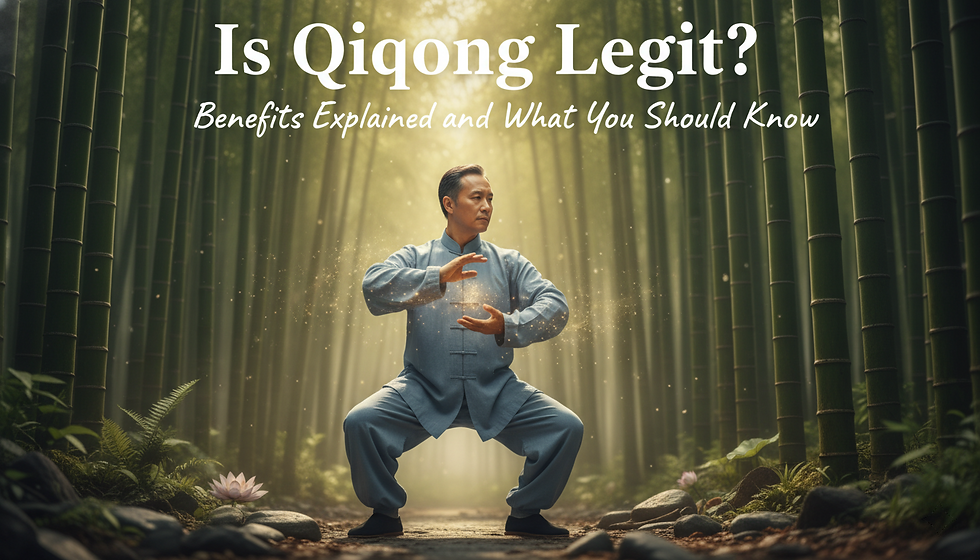
What Is Qigong?
Qigong (pronounced “chee-gong”) is a practice that combines:
slow, flowing movement
breathing techniques
focused awareness
The word itself comes from:
“Qi” (energy or life force)
“Gong” (practice or cultivation)
In simple terms, Qigong is about working with your body’s natural energy through gentle movement and breath.
Unlike many forms of exercise, Qigong is not focused on intensity.
It’s focused on balance.
Why People Question Qigong
Qigong can feel unfamiliar, especially if you’re used to traditional workouts.
Common doubts include:
“It looks too slow to do anything”
“Is this scientifically proven?”
“Is it just meditation?”
These questions are completely normal.
The key is understanding that Qigong works differently from high-intensity exercise.
Is Qigong Legit?
Yes—Qigong is a legitimate practice, but it’s important to understand what that means.
Qigong is not:
a quick fix
a miracle cure
a replacement for medical treatment
However, it is:
a structured mind-body practice
widely used for relaxation and balance
supported by growing research in stress reduction and wellbeing
Its effectiveness comes from consistency and how it influences your body over time.
How Qigong Works
Qigong works by helping your body move out of stress mode and into a more relaxed state.
1. It Calms the Nervous System
When you’re stressed, your body stays in a heightened state.
Qigong’s slow movements and breathing help:
slow your heart rate
relax your muscles
reduce tension
This creates a calming effect.
2. It Improves Circulation
Gentle movement increases blood flow throughout the body.
This helps:
deliver oxygen more efficiently
reduce stiffness
support overall energy levels
3. It Builds Body Awareness
Qigong encourages you to notice:
how your body feels
how you move
how you breathe
This awareness helps you recognize tension earlier and respond to it.
4. It Promotes Energy Balance
In traditional practice, Qigong focuses on balancing the body’s energy flow.
Even if you don’t think in terms of “energy,” many people describe feeling:
lighter
more refreshed
more stable
Benefits of Qigong
1. Reduces Stress and Anxiety
Qigong is especially effective for calming the mind.
The slow, repetitive movements help shift your focus away from stress.
2. Increases Energy Levels
Instead of draining your energy, Qigong often leaves you feeling more energized.
This makes it different from intense workouts.
3. Improves Flexibility and Mobility
The gentle movements help loosen the body over time.
This can improve:
range of motion
posture
physical comfort
4. Supports Mental Clarity
By slowing down your thoughts, Qigong can help you feel more focused and clear.
5. Easy to Start
Qigong is accessible to almost everyone.
You don’t need:
experience
strength
flexibility
This makes it beginner-friendly.
What Qigong Feels Like
If you’ve never tried it, the experience may surprise you.
During a session, you may notice:
your body gradually relaxing
your breathing becoming deeper
your mind slowing down
Some people feel subtle sensations like warmth or lightness.
Others simply feel calm.
There’s no “right” experience.
How Qigong Compares to Yoga
Qigong and yoga are often compared, but they have different styles.
Yoga:
structured poses
more physical effort
focus on strength and flexibility
Qigong:
continuous flowing movement
very gentle
focus on relaxation and balance
If you’re curious, you can explore **** for a more movement-based approach.
How Qigong Compares to Sound Healing
Qigong involves movement, while sound healing is passive.
Sound healing:
you lie down or sit
focus on listening
Qigong:
you move slowly
engage your body
Many people combine Qigong with **** for deeper relaxation.
Who Should Try Qigong?
Qigong is a great option if you:
feel stressed or overwhelmed
want a gentle form of movement
feel low on energy
prefer a slower pace
Because it’s low-impact, it’s suitable for a wide range of people.
How Often Should You Practice Qigong?
You don’t need to practice every day.
A good starting point is:
1–3 sessions per week
Even short sessions can be effective.
Consistency matters more than duration.
What Qigong Cannot Do
It’s important to have realistic expectations.
Qigong is not:
a miracle solution
an instant fix
It works gradually by supporting your body over time.
Why Qigong Is Becoming More Popular
In places like Richmond, more people are exploring wellness practices that go beyond traditional exercise.
Qigong is gaining attention because it:
is simple
feels accessible
helps people slow down
As stress levels increase, practices like Qigong offer a different approach to wellbeing.
Try Qigong in Richmond
If you’re curious, the best way to understand Qigong is to experience it.
You can explore **** designed to be beginner-friendly and easy to follow.
A guided session helps you learn proper movement and build confidence.
Final Thoughts
So, is Qigong legit?
Yes—but not in the way you might expect.
It’s not about intensity or quick results.
It’s about:
slowing down
reconnecting with your body
creating balance over time
And for many people, that’s exactly what makes it effective.


