How to Build a Weekly Wellness Routine That Actually Feels Sustainable

A lot of people want to feel healthier, calmer, and more balanced.
But when it comes to building a wellness routine, many quickly become overwhelmed.
They try to:
do too much at once
follow strict schedules
completely change their lifestyle overnight
And after a few weeks, the routine becomes exhausting instead of helpful.
The truth is that a good wellness routine should not feel stressful.
It should support your life, not control it.
A sustainable weekly wellness routine is not about perfection. It’s about creating small, consistent habits that help your body and mind feel better over time.
In this guide, we’ll walk through how to build a realistic wellness routine that supports:
stress relief
relaxation
mental clarity
physical balance
without making your life feel more complicated.
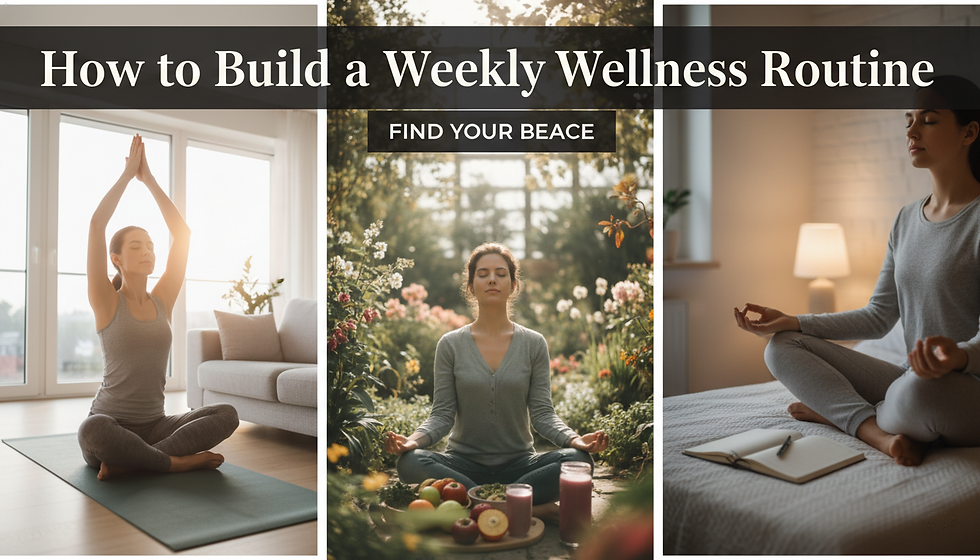
What Is a Wellness Routine?
A wellness routine is a collection of habits and activities that support your overall wellbeing.
This includes:
physical wellness
mental health
emotional balance
stress management
rest and recovery
A balanced routine helps you feel more:
grounded
energized
calm
connected to yourself
Why Most Wellness Routines Fail
Many routines fail because they are:
too intense
unrealistic
overly restrictive
People often believe wellness requires:
waking up at 5am
long daily workouts
complicated schedules
perfect discipline
But sustainable wellness is usually much simpler.
Small habits repeated consistently matter more than extreme routines.
Step 1: Start with Your Real Life
Before building a routine, look honestly at your lifestyle.
Ask yourself:
How much free time do I realistically have?
What currently drains my energy?
What activities genuinely help me feel calmer?
Your routine should fit your life—not someone else’s.
Step 2: Focus on Balance Instead of Perfection
A healthy wellness routine includes both:
activity
recovery
Many people focus only on productivity or exercise while ignoring rest.
Real wellness requires balance.
This means creating time for:
movement
stillness
relaxation
mental recovery
Step 3: Add Gentle Movement
Movement helps reduce stress and improve energy.
But your routine does not need intense workouts every day.
Gentle practices are often easier to maintain long term.
You can include:
yoga
stretching
walking
Qigong
You can explore **** if you want mindful movement that supports both body and mind.
Why Gentle Movement Works
Gentle movement helps:
release physical tension
improve circulation
calm the nervous system
It supports recovery instead of adding more stress to the body.
Step 4: Include Mental Relaxation
A wellness routine should also support your mental wellbeing.
Many people stay mentally active all day without realizing how exhausted their minds become.
Mental recovery is just as important as physical recovery.
This may include:
breathing exercises
mindfulness
meditation
sound healing
Step 5: Schedule Actual Rest
One of the biggest mistakes people make is treating rest like something optional.
Rest is part of wellness.
Without recovery, stress and tension continue building.
Allowing yourself time to:
pause
slow down
do less
is not laziness.
It’s necessary for balance.
Step 6: Try Sound Healing for Deep Relaxation
If your mind constantly feels overstimulated or overwhelmed, sound healing may help.
Many people find that **** help quiet mental noise and encourage deeper relaxation.
Sound baths create space for:
stillness
nervous system recovery
mental calmness
Step 7: Build Around Your Energy Levels
Not every day needs to look the same.
Some days you may feel:
energized
motivated
active
Other days you may need:
gentler movement
more rest
quieter activities
A sustainable wellness routine allows flexibility.
Step 8: Include Practices That Calm Your Nervous System
Many people live in a constant state of stress without realizing it.
Gentle wellness practices help shift the body into a calmer state.
This can include:
breathing exercises
yoga
Qigong
meditation
sound healing
You can explore **** if you enjoy slower, mindful movement.
Step 9: Keep Your Routine Simple
The simpler your routine is, the easier it becomes to maintain.
You do not need:
3-hour morning routines
strict wellness schedules
complicated systems
Even small habits can create meaningful changes over time.
Example of a Simple Weekly Wellness Routine
Here’s an example of what a balanced routine might look like.
Monday
gentle stretching
short evening walk
Tuesday
yoga class
reduced screen time before bed
Wednesday
quiet evening
breathing exercises or meditation
Thursday
Qigong or light movement
journaling or reflection
Friday
sound bath or relaxation session
early bedtime
Weekend
nature walk
rest and recovery
flexible self-care activities
The goal is consistency, not perfection.
Step 10: Avoid Turning Wellness into Pressure
Ironically, some people become stressed trying to “do wellness correctly.”
But wellness should not feel like another form of pressure.
If your routine makes you feel:
guilty
overwhelmed
exhausted
it may be too rigid.
A good wellness routine should feel supportive, not demanding.
Why Slow Progress Is Completely Normal
Wellness is not about instant transformation.
You may notice small improvements gradually:
better sleep
reduced tension
calmer thoughts
improved energy
These changes often happen quietly over time.
Why Recovery Is Becoming More Important
Modern lifestyles constantly encourage people to:
do more
move faster
stay productive
But the nervous system also needs:
stillness
quietness
recovery
This is why more people are turning toward gentler wellness practices.
Why Wellness Routines Should Feel Personal
There is no perfect routine that works for everyone.
Some people enjoy:
yoga
group classes
meditation
Others prefer:
nature walks
quiet evenings
gentle movement at home
The best routine is the one you genuinely enjoy enough to continue.
Why More People in Richmond Are Prioritizing Wellness
Richmond’s wellness community continues growing because more people are realizing the importance of:
stress management
nervous system support
balance and recovery
Wellness is no longer just about fitness.
It’s about feeling healthier mentally and emotionally too.
Final Thoughts
Building a weekly wellness routine does not require perfection or drastic lifestyle changes.
Often, the most sustainable routines are built from:
simple habits
gentle movement
intentional rest
moments of calmness
You do not need to transform your entire life overnight.
Start small.
Move slowly.
And allow wellness to become something that supports your life—not something that overwhelms it.


